
Demetra Skaltsas
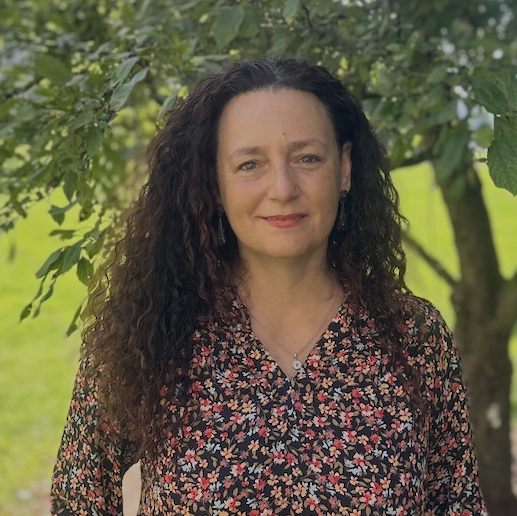
- MIT Sponsors:
The trailblazers in human, academic, scientific and religious freedom have always been in the minority… It will take such a small committed minority to work unrelentingly to win the uncommitted majority. Such a group may transform America’s greatest dilemma into her most glorious opportunity.
Background
Demetra N. Skaltsas is an Assistant Professor of Agricultural and Environmental Science at Diné College and Director of the Land Grant Office Agricultural Research Laboratory on the Navajo Nation. She earned her Ph.D. from the University of Maryland, College Park, and completed postdoctoral training as an Oak Ridge Institute for Science and Education (ORISE) Fellow with the United States Department of Agriculture before joining Diné College.
Dr. Skaltsas is a mycologist whose research focuses on the interactions among fungi, plants, microbes, and the environment, with applications in forest health, environmental monitoring, ecosystem resilience, genomics, and bioremediation. Her current research includes investigating fungal endophytes associated with medicinal and culturally important plants, exploring the use of fungi in strategic mineral discovery and environmental remediation, monitoring water quality in tribal communities, and assessing forest ecosystem health on the Navajo Nation.
At Diné College, Dr. Skaltsas established the Land Grant Office Agricultural Research Laboratory and leads research programs that provide undergraduate and graduate students with hands-on experience in molecular biology, microbiology, genomics, environmental science, and natural resource management. Through research, mentorship, and workforce development initiatives, she works to expand access to scientific training, strengthen research capacity at Indigenous-serving institutions, and help students develop the skills and confidence needed to pursue graduate education and STEM careers.
As an MIT MLK Visiting Scholar, Dr. Skaltsas looks forward to building new collaborations, advancing environmental and genomic research, and exploring innovative approaches to strengthening research capacity and student success at Indigenous-serving institutions.
Interests
Fungi, endophytes, microbes, microbial ecology, ecosystem health, resilience, biodiversity, genomics, eDNA, forest health, water quality, bioremediation, mineral discovery, Indigenous communities, tribal collaboration, environmental microbiology, sustainable management, STEM education, capacity building, and amplicon sequencing
Sample Work
Publication
Comparative analysis of the endophytic community in adults and seedlings of two Neotropical tree genera revealed a drastic taxonomic and ecological turnover
Skaltsas, D., Badotti, F., Vaz, A., Silva, F., Gazis, R., Wurdack, K., Castlebury, L., Góes-Neto, A., & Chaverri, P. (2020). Comparative analysis of the endophytic community in adults and seedlings of two Neotropical tree genera revealed a drastic taxonomic and ecological turnover. Scientific Reports.
Publication
Comparative genome analyses suggest a hemibiotrophic lifestyle and virulence differences for the beech bark disease fungal pathogens Neonectria faginata and Neonectria coccinea
Salgado-Salazar, C., Skaltsas, D. N., Phipps, T., & Castlebury, L. A. (2021). Comparative genome analyses suggest a hemibiotrophic lifestyle and virulence differences for the beech bark disease fungal pathogens Neonectria faginata and Neonectria coccinea. G3, 11(4), jkab071.
Publication
An integrative view of the phyllosphere mycobiome of native rubber trees in the Brazilian Amazon
Fonseca, P. L. C., Skaltsas, D., da Silva, F. F., Kato, R. B., de Castro, G. M., García, G. J. Y., et al. (2022). An integrative view of the phyllosphere mycobiome of native rubber trees in the Brazilian Amazon. Journal of Fungi, 8(4), 373.
Publication
Ecological Partnership: Restoring Pinyon Woodlands on the Navajo Nation, USA
Whitehair, L., Litson, B., Neztsosie, B., Skaltsas, D., Martin, J., Begay, J., et al. (2024). Ecological Partnership: Restoring Pinyon Woodlands on the Navajo Nation, USA. Trees, Forests and People, 100605.